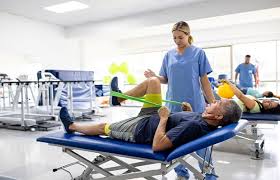
Most physical therapists work in hospitals and health practitioners’ offices, but some choose to do research or teach at academic institutions. They can also work in home healthcare services and outpatient rehabilitation facilities. Some choose to specialize in specific areas of the body, such as orthopedics or pediatrics. They can even provide wound care therapy and promote proper healing in patients with certain cardiopulmonary conditions.
Electrical stimulation of motor nerves elicits muscle contractions, mimicking the natural signals sent by the brain. This is useful in helping to strengthen weakened or injured muscles, and it can also be helpful in improving balance and coordination. It can also be used to treat muscle spasms and sprains, and it can help decrease inflammation in the joints.
The therapist will create an individualized treatment program that takes into account your specific condition and personal goals. They will discuss how many treatments you should have per week, the length of each session, and how long you should be receiving physical therapy for your condition. They will also give you instructions on exercises to do at home. The therapists will consult with your doctor throughout the treatment process to ensure that your recovery is progressing as expected.
Balance Chicago
Illinois Bone & Joint Institute (IBJI) is a musculoskeletal healthcare organization comprised of highly-trained professionals working as dedicated teams to provide empathetic, timely, convenient, efficient, highest quality care, so patients can “Move Better, Live Better.” The practice has more than 150 physicians and more than 100 locations throughout the Chicago area. The team includes physicians in every orthopedic specialty and a full range of diagnostic and rehabilitation services.
Balance is a skill that helps a person or an object remain steady or stable. It can take on many forms, both physical and emotional. Balance is an important component of overall health and wellness, and psychotherapy can be a good way to achieve it. It can also be a great tool for people suffering from anxiety, depression, and other mental illnesses. Balance Chicago provides a variety of services, including balance therapy, acupuncture, and physical therapy. Its physical therapists specialize in helping people with dizziness and vertigo. They use a combination of techniques to treat the condition, such as vestibular rehabilitation and orthopedic rehabilitation.
Most DPT programs require applicants to take prerequisites such as courses in human anatomy, physiology, chemistry and statistics. These courses help students develop the analytical and critical thinking skills they’ll need to care for patients holistically, as opposed to treating a specific condition or injury. In addition to classroom lectures, most DPT programs incorporate hands-on clinical education.
Physical therapy is an essential medical specialty for people with physical disabilities or injuries caused by accidents or diseases. It can help reduce pain, improve mobility, and reduce the risk of falls. Moreover, it can improve the quality of life by helping individuals lead active lifestyles and reach their fitness goals. It is a highly specialized field, and it requires a large amount of training to become an effective physical therapist.
In addition to continuing education, PTs must renew their licenses periodically, and requirements vary by state. Some states require a background check or a law exam in addition to a written exam.
After graduation, licensed PTs can choose to complete a one-year residency or fellowship. Similar to the path of a physician, a residency offers specialized didactic training with mentoring by an experienced clinician. There are currently 185 residency programs and 36 accredited fellowships.
The physiotherapist will put electrodes on the skin, and then connect them to a machine that produces electrical pulses. These pulses will activate sensory nerves, which can then stimulate the production of endorphins, which act as natural painkillers. This can reduce pain signals that the brain sends to the body, and it can also increase the effectiveness of medication.
Education
Your physical therapist will prescribe regular strength-training exercises that can be done at home. These will typically be lower in intensity than a traditional gym workout, but still provide the muscles with enough challenge to grow stronger. For example, they might have you perform a series of repetitions with light resistance. Or they might have you try doing some beginner’s yoga.
Following the examination, the therapist will provide you with a clear explanation of your problem and will explain what you can expect from the physical therapy treatment. They will recommend a treatment plan, which may include therapeutic exercise, manual therapy techniques, neuromuscular re-education and electrical stimulation. They may also prescribe short-term and long-term goals and discuss discharge planning with you.
The Des Plaines-based company also recently renewed its partnership with Major League Rugby’s Chicago Hounds to help players stay healthy and play at the top of their game. IBJI sports medicine experts will support the Hounds at practices and games to optimize player performance.
Coordination and balance exercises are important for helping you perform everyday tasks. They are usually done standing up and involve repetitive movements that work more than one joint or muscle. For example, your therapist might have you stand on one leg for short bursts of time and instruct you to shift your weight from side to side and backward and forward. They might also have you do balancing exercises that are similar to those done on parallel bars. This is to help improve your balance and reduce the risk of falls, which can lead to serious injury.
Your physical therapist will use different types of manual techniques depending on your specific injuries. They can include soft tissue mobilization/massage, joint manipulation and/or active release techniques. Your therapist may also apply gentle traction, compression or vibration to the injured area to reduce pain, swelling and stiffness.
The company’s physiotherapists use the Reavy Method to treat patients. This technique involves focusing on surrounding muscle groups as well as the point of pain to provide holistic healing and release restrictions in movement. It is a gentle and hands-on approach, and the results are long-lasting. The company also offers online booking, allowing patients to schedule appointments from anywhere.
They specialize in treating sports injuries, such as neck and back pain, sprains and strains, shoulder and elbow problems, and knee problems. They also work with people who suffer from chronic conditions, including fibromyalgia, whiplash, arthritis, and carpal tunnel syndrome. They are also skilled in treating pelvic floor dysfunction and gynecological disorders, such as pelvic girdle pain and diastasis rectus abdominis.
Manual therapy
One of the main benefits of electrotherapy is that it can help reduce muscle atrophy. Muscles that aren't stimulated regularly can weaken and atrophy, which can limit movement and affect quality of life. With electrotherapy, the physiotherapist can stimulate and contract muscles to prevent this atrophy. The stimulation is similar to that used in resistance training, but it is usually more effective. It is thought that this is because the same motor units are targeted over and over rather than just some of them, as is the case with resistance training.
Physical therapy, also known as physiotherapy, may include exercises, massages and various treatments based on physical stimuli (e.g. heat, cold, electrical currents or ultrasound). The aim of physical therapy is to relieve pain, help you move better or strengthen weakened muscles.
Physical therapy can help: Strengthen your muscles, reducing the strain on your joints. Improve balance and/or mobility. Relieve joint pain.
Whether it's back pain, joint discomfort, or muscle aches, ongoing pain can significantly impact your daily life. If pain lasts for more than a few days or interferes with your ability to perform routine activities, it's a clear sign that you should consult a physical therapist.
Dispelling a common misconception, a formal diagnosis isn't always a prerequisite for seeking physical therapy: Assessment and Treatment: Physical therapists are skilled at conducting assessments to identify musculoskeletal issues and tailor treatment plans accordingly.
A typical order for physical therapy will ask for 2-3 visits per week for 4-6 weeks. Sometimes the order will specify something different. What generally happens is for the first 2-3 weeks, we recommend 3x per week. This is because it will be the most intensive portion of your treatment.
The length of this treatment is dependent on your progress and compliance with your physical therapist's recommendations. On average, it can take around a few weeks to a few months to complete physical therapy treatment depending on severity and how consistent you are in your care.